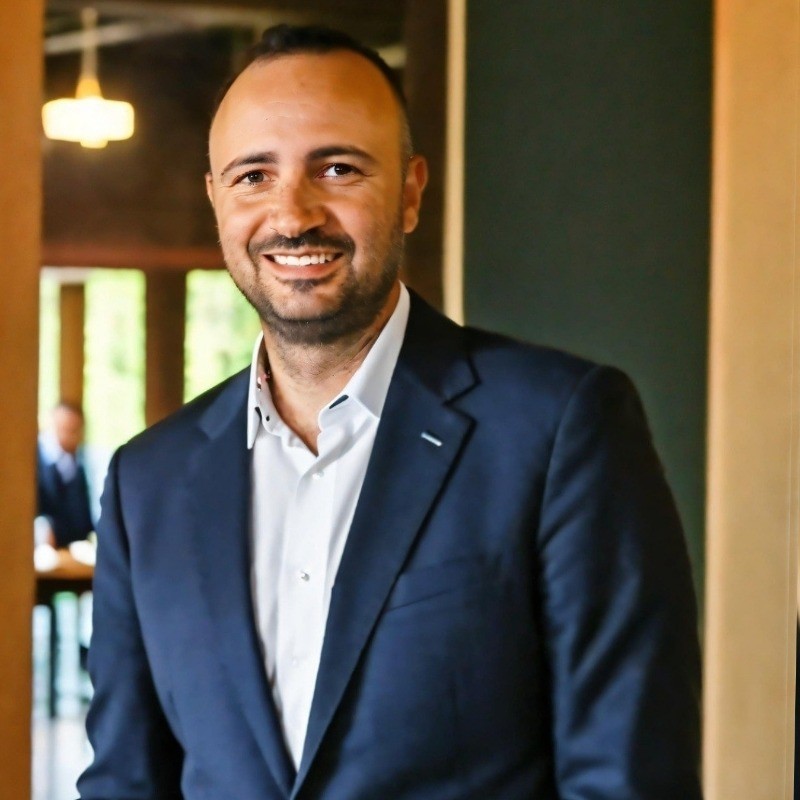
His work spans data mining, data management, and trustworthy AI, currently focusing on biomedical applications and explainability of transformer-based language models.
Generative AI for Social Good and Vulnerable Populations
A CIKM 2026 workshop on responsible, knowledge-grounded, and deployable generative AI systems serving social-good applications and underserved communities.
Building useful GenAI where the stakes are real.
Generative AI has become a general-purpose technology for producing text, images, code, and explanations across knowledge-intensive tasks. This creates new opportunities for social good in domains where expertise, data, and resources are scarce, including rare diseases, low-resource education, accessibility, crisis response, sustainability, public-service access, and information integrity.
These are also the settings where failures can be most harmful. GenAI systems may hallucinate, reproduce linguistic or cultural biases, privilege high-resource languages, leak sensitive information, amplify inequalities, or impose computational costs that make deployment impractical for low-resource organizations. GenAI4SG brings together researchers working on retrieval-augmented generation, agentic systems, multimodal models, and knowledge-grounded AI to study how these technologies can be responsibly designed, evaluated, and deployed in line with the UN Sustainable Development Goals.
The workshop is aligned with the CIKM community, drawing on information retrieval, knowledge management, databases, data mining, machine learning, NLP, and recommender systems to retrieve evidence, build and maintain knowledge bases, generate grounded explanations, evaluate information quality, and deploy systems over heterogeneous data.

Topics of interest
We welcome technical, empirical, resource, demo, and position papers on methods, systems, datasets, benchmarks, and applications.
- Retrieval-augmented generation and evidence-grounded GenAI for high-impact domains.
- Knowledge-graph integration, semantic grounding, fact-checking, and source verification.
- LLM agents and agentic workflows for social-good applications.
- Multimodal GenAI for health, education, accessibility, crisis response, and sustainability.
- Synthetic data generation, data-centric GenAI, and low-resource adaptation.
- Benchmarks, datasets, and evaluation protocols for societal benefit and deployment risk.
- Fairness, robustness, privacy, explainability, and human-centered assessment.
- Efficient, sustainable, and practical deployment for public-interest organizations.
- Applications supporting vulnerable and underserved populations.
- Information integrity, misinformation detection, and coordinated manipulation analysis.
Guidelines
Submissions will be handled electronically through EasyChair. Papers should follow the ACM two-column format.
We plan to accept full papers presenting mature technical or empirical contributions; short papers and position papers presenting preliminary results or research agendas; and dataset, benchmark, and demo papers presenting reusable resources or systems.
Each submission will receive at least two reviews. Evaluation criteria include relevance to the workshop, technical quality, novelty, clarity, methodological soundness, potential societal benefit, and awareness of risks for vulnerable or underserved populations.
Participation is open to all registered CIKM attendees. At least one author of each accepted paper is expected to register and present the work on-site in Rome.
Submit via EasyChairImportant Notes
Workshop papers will not be included in the ACM proceedings by default. Archival publication options and opt-in proceedings details will be announced in accordance with CIKM policies.
All deadlines are 11:59 PM Anywhere on Earth unless stated otherwise.
ACM TemplateTentative half-day schedule
Final times, accepted papers, and invited speakers will be announced after the submission and review process.
Opening
Workshop motivation and overview.
Invited Talk
Generative AI systems for social-good applications, with Q&A. Speaker TBD.
Paper Session I
Methods and systems, including RAG, knowledge grounding, multimodal models, agents, synthetic data, and efficient deployment, followed by joint panel Q&A.
Coffee Break and Interaction
Informal discussion, posters, and demo interaction.
Paper Session II
Applications, evaluation, and deployment in health, education, accessibility, crisis response, sustainability, and information integrity, followed by joint panel Q&A.
Open Discussion and Closing
Open challenges for GenAI systems serving vulnerable and underserved populations.
TBD
Updates will be posted as speakers are confirmed.
Organizers
His work focuses on online social safety, social computing, algorithmic bias, and ML methods for detecting coordinated information operations.
Full Professor of Information Systems, coordinator of the MSc in Data Science, and Director of the CINI ITEM national laboratory.
Reviewers
- Collin Leiber, Aalto University
- Federico Cinus, Intesa Sanpaolo AI Center
- Saurabh Kumar, IIT Hyderabad
- Salvatore Citraro, ISTI-CNR
- Ruo-Chun Tzeng, Microsoft
- Tonmoay Deb, Microsoft
- Chongyang Gao, Northwestern University
- Natalia Denisenko, Northwestern University
- Valerio La Gatta, Northwestern University
- Lirika Sola, Northwestern University
- Eliana Pastor, Politecnico di Torino
- Eleonora Grassucci, Sapienza University of Rome
- Gizem Gezici, Scuola Normale Superiore
- Guangyi Zhang, Shenzhen Technology University
- Sijing Tu, Stanford University
- Ashwin Rao, USC Information Sciences Institute
- Francesco Di Serio, University of Naples Federico II
- Michela Gravina, University of Naples Federico II
- Mariano Barone, University of Naples Federico II
- Giuseppe Riccio, University of Naples Federico II
- Antonio Romano, University of Naples Federico II
- Simone Piaggesi, University of Pisa
- Marta Marchiori Manerba, University of Turin
- Francesco Fabbri, Spotify